Which Is Better to Watch First PRX vs G2 Full Match or Highlight Reel
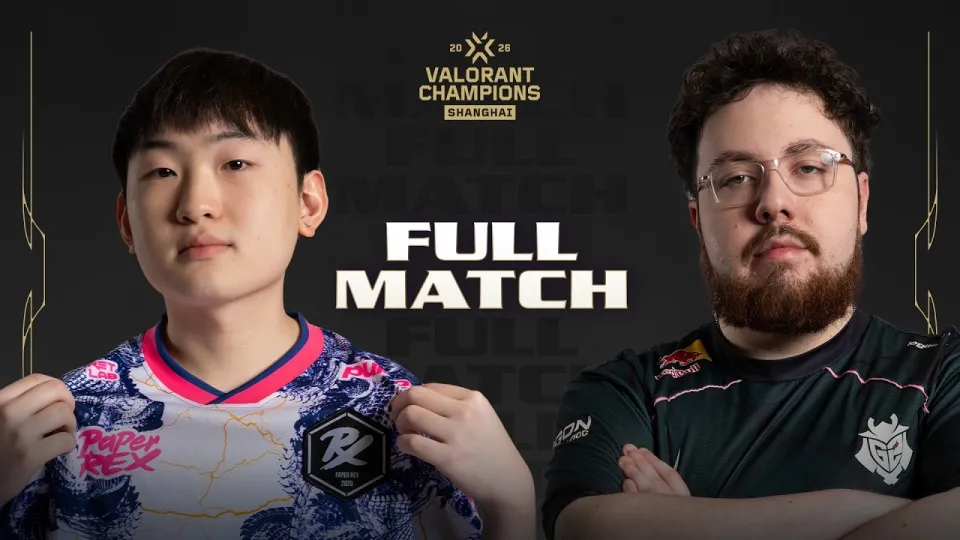
Video: PRX vs. G2 — FULL MATCH — VALORANT Champions Shanghai — Group Stage
Need articles like this for your video? They help promote it on YouTube and Google — order them in the Telegram bot @sat_sit_bot. It writes articles around your video, embeds the video and publishes them on popular niche websites (no ads). Free trial — 50 articles.
Key takeaways
- PRX vs G2 is a Group Stage series from VALORANT Champions Shanghai, published on the VALORANT Champions Tour channel on September 29.
- The broadcast runs over two hours, with the longest single stretch of action landing around the 2:26 mark.
- Haven and Split produced the most debate in the comments, with d4v41 and Trent singled out for standout maps.
- Shanghai runs September 24 to October 18 and features sixteen teams from Americas, CN, EMEA and Pacific.
- The full VOD preserves economy resets and clutch sequences that highlight packages cut away.
The full match VOD is the better watch if you want to understand how PRX and G2 actually trade rounds, while a highlight reel is the better watch if you only have twenty minutes and want the clutch moments. For anyone studying Valorant at a competitive level, the full series is the only version that shows the economy resets, the mid-round calls and the small adjustments that decide maps. The official VOD sits on the VALORANT Champions Tour channel, and the fastest way to catch follow-up broadcasts and schedule updates is the official VALORANT Esports Twitter/X account, which posts match announcements and stream links as they go live.
What the PRX vs G2 full match actually contains
A full match upload is the unedited broadcast, and that is the whole point of it. PRX versus G2 is a Group Stage series at VALORANT Champions Shanghai, played inside a tournament that runs from September 24 to October 18 and gathers sixteen teams from the Americas, CN, EMEA and Pacific regions. The video published on September 29 opens with the standard spoiler warning overlay, which the channel uses so viewers can watch without the score being visible in the thumbnail or the first seconds of playback.
What you get in the full version, and not in a condensed cut:
- The complete pick-and-ban phase for every map, including which agent compositions each team locked in and in what order.
- Every pistol round, which sets the tone for the following two rounds and often decides a half.
- Full buy, force buy and save rounds, so you can track how a single lost bonus round compounds into a three-round deficit.
- The pause and timeout segments, where coaches talk and teams reset mentally.
- Post-map interviews and analyst desk breakdowns between games.
A highlight package keeps only the kills. The full match keeps the reasons those kills were possible.
Map-by-map talking points from the series
Haven and Split carried most of the discussion around this series, and both maps are worth watching in full rather than in clips. On Haven, the recurring theme in viewer reactions was one player carrying an outsized share of the round wins, which in a full watch becomes visible as repeated site takes built around a single duelist rather than as isolated frags. On Split, the praise went the other way: one player was described as looking like a complete, near-perfect performer across attack and defense, which is a claim you can only test by watching both halves.
A third map produced the loudest individual reaction of the night, with a player described as popping off in a way that turned the map into a highlight reel on its own. That is exactly the kind of performance a short clip flatters and a full VOD explains: the entry timings, the utility usage and the way the opposing team kept feeding the same duel.
Why the economy is the part highlights always lose
Valorant rounds are decided as much by credit management as by aim, and the economy layer only exists in the full match. When a team wins a round but loses four players, the next round is usually a save or a light buy, and the round after that is where the real damage happens. Watching the full series lets you count those sequences instead of guessing at them.
Three patterns are worth tracking while you watch:
- Which team converts its first bonus round, and how many rounds that single conversion is worth across the half.
- How often a team forces after a loss, and whether the force is built around one operator or a full rifle buy.
- Whether the losing side ever breaks the opponent's economy with a save-round win, which is the single most demoralising way to lose a half.
In a two-hour-plus broadcast, these moments are scattered and easy to miss. They are also the reason analysts rewatch series like this one instead of relying on clips.
Common viewer questions about this broadcast
The comments under the upload show a few recurring concerns that are worth addressing directly, because they apply to almost every long-form Valorant broadcast. The first is audio: several viewers flagged a moment where the sound appeared to cut out mid-broadcast. Broadcast audio drops are usually a stream-side issue rather than a problem with the uploaded file, and rewatching that segment in the VOD is the quickest way to confirm whether the mix or the capture was at fault.
The second is the in-arena screens. One viewer noticed teams that were not part of this series appearing on the physical displays behind the stage, which is normal at a multi-team event: the venue rotates promotional and schedule graphics for the whole tournament, not just the match in progress. The third is the weapon choice that ended one of the later rounds, where a player opted for a heavy machine gun instead of a rifle. That decision is a classic economy read, and it is far easier to judge in context than in a five-second clip.
The fourth theme is emotional rather than technical. Long-time fans of the losing side described the experience as genuinely stressful, which is a fair summary of what a close Group Stage series does to a viewer. Group Stage results at a sixteen-team event matter for seeding, so dropped maps carry real consequences into the playoff bracket.
How to watch the series efficiently
If you want the full experience without losing an entire evening, there is a middle path. Start with the pick-and-ban phase of each map, then watch the first four rounds of each half, then jump to the final four rounds of each map. That structure gives you the compositions, the early economy reads and the closers, which together account for most of what makes the series interesting.
If you are watching to improve your own play, do the opposite: pick one player and follow only their perspective for a full map. Watching a single agent's positioning across twenty rounds teaches more than watching twenty different players hit one highlight each. Pair that with the official channels for schedule context, since the tournament calendar is dense and matches overlap.
Useful links
- VALORANT Esports on Twitter/X — match announcements, stream links and schedule updates.
- VALORANT Esports on Facebook
- VALORANT Esports on Instagram
- VALORANT Esports on TikTok
- VALORANT on Twitch
Final verdict on full match versus highlights
For PRX versus G2, the full match wins on substance and the highlight reel wins on time. The series has enough swing rounds, economy turns and single-player performances that a condensed cut flattens it into a kill compilation, and the maps that generated the most discussion only make sense with their surrounding context intact. Watch the full VOD once, then use clips to revisit the moments you want to study. The upload comes from the VALORANT Champions Tour channel, which produces the official broadcast coverage for the event, and following VALORANT Esports on Twitter/X is the simplest way to catch the next series live rather than on delay.
Source: PRX vs. G2 — FULL MATCH — VALORANT Champions Shanghai — Group Stage · Markdown version
Questions & answers
Is the PRX vs G2 match worth watching in full instead of a highlight reel?
Yes, if you care about how the series was actually won. The full broadcast shows pick-and-ban, pistol rounds, force buys and save rounds, which are the parts that explain the scoreline. Highlights keep the kills but drop the economy decisions that made those kills possible.
Why do some viewers complain about audio cuts or unrelated teams on the arena screens?
Broadcast audio drops are usually a stream-side issue rather than a problem with the uploaded VOD, so rewatching the segment confirms whether the capture or the mix was at fault. Arena screens at a sixteen-team event rotate graphics for the whole tournament, so teams outside the current match can appear on them.
Which maps produced the most standout individual performances?
Haven and Split drew the most reaction, with one player carrying a heavy share of rounds on Haven and another described as near-perfect across both halves of Split. A later map produced the loudest single performance of the series, which is best judged in full context rather than in a clip.
How long is the full broadcast and how should a new viewer approach it?
The upload runs over two hours, with the longest continuous stretch of action landing around the 2:26 mark. A practical approach is to watch each map's pick-and-ban, the first four rounds of each half and the final four rounds, which covers most of the meaningful decisions without committing to the entire runtime.