How JTeles Turned 126,000 Cloth Into Rust's Biggest Farm in a Single 2026 Wipe
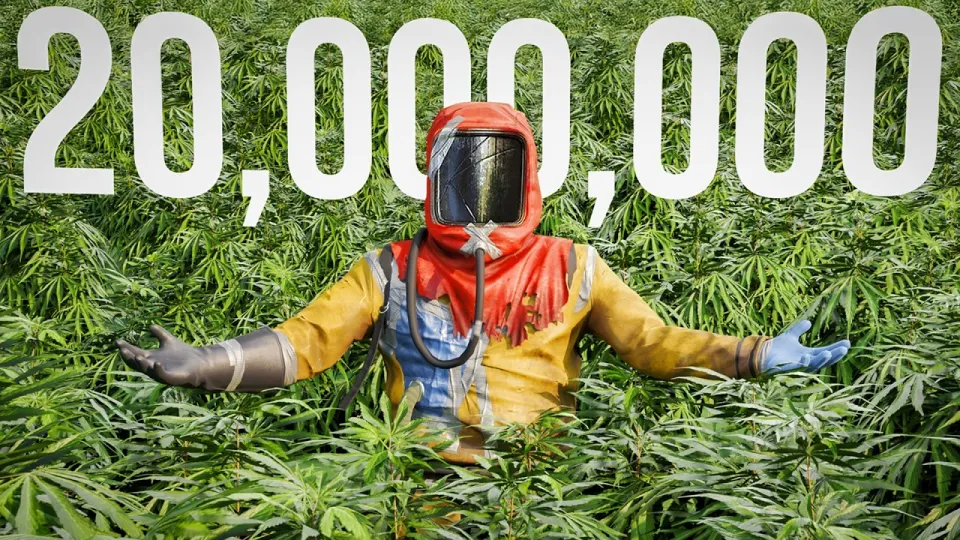
Video: I Became Rust's #1 Farmer...
Need articles like this for your video? They help promote it on YouTube and Google — order them in the Telegram bot @sat_sit_bot. It writes articles around your video, embeds the video and publishes them on popular niche websites (no ads). Free trial — 50 articles.
Key takeaways
- JTeles started the wipe with 126,000 cloth and set a goal of 20,000,000 cloth within 7 days.
- He invited viewers onto the server to help build and defend what he calls the biggest cloth farm in Rust.
- A large Russian clan learned about the project and attacked the farm with PVP, raids and base defense fights.
- Clan members kept the compound running and defended it while JTeles was offline.
- The finished farm was so large that rendering the whole compound lagged the server.
Rust farming usually means a few planters in a corner of your base, but JTeles turned it into a server-wide project: he started a wipe with 126,000 cloth and tried to reach 20,000,000 cloth in seven days, inviting viewers onto the server to build the biggest cloth farm in Rust. The run turned into a full campaign of farming, PVP, raids and base defense after a large clan decided to stop him. The video breakdown below covers how the attempt was structured, what it cost, and what other players can learn from it. You can also grab the War Thunder bonus from the video's sponsor link.
What the 20,000,000 cloth challenge in Rust actually required
The challenge was a numbers problem first and a PVP problem second. Cloth in Rust comes from hemp plants grown in planters, and the yield depends on genetics, water, light and how much time you spend harvesting and replanting. Scaling from 126,000 cloth to 20,000,000 means roughly a 160-fold increase, which is not achievable by one player hand-watering a few boxes.
To get there, the farm had to be industrial:
- A planter layout large enough that planting and harvesting become a full-time job for several players.
- A steady water supply, since planters need irrigation to keep growth fast and predictable.
- Genetics work to push cloth yield per plant as high as possible before mass planting.
- Storage and logistics so millions of cloth do not sit in one raid-able room.
- A crew, because the clock does not stop when the owner sleeps.
Why viewers were invited onto the server
The project depended on manpower, so JTeles opened the server to viewers and turned the farm into a shared operation. That decision shaped everything that followed: a public farm attracts farmers, but it also attracts raiders, and a compound full of helpers is a very visible target.
The payoff was a crew that could keep the planters cycling around the clock. The risk was information: the moment dozens of players know where the biggest cloth farm on the server is, the whole map knows too. A clan cannot be stopped by hiding when the base is that large, so the farm had to be defended rather than concealed.
The clan war that interrupted the farm
A massive Russian clan found out what was being built and did everything it could to stop it, which turned the wipe into a mix of farming, PVP, raids, base defense and alliances. For a farming challenge, that is the worst-case scenario: every hour spent fighting is an hour the planters are not being replanted.
The defense worked because of the crew. Members held the compound while JTeles was offline, which is the part that decides whether a mega-farm survives a wipe. A base that only functions when its owner is online is a base that gets raided on the first night.
How big the compound got and what it did to the server
The finished compound grew so large and built-up that looking at it in one go caused server lag. That is a useful benchmark for anyone planning a mega-farm: Rust servers have limits, and a base that stresses them is both a trophy and a liability.
Lag also has practical consequences. Rendering hitches during a raid are dangerous, and a farm that is visible from far away is easy to scout. If you build at this scale, expect performance to become part of the gameplay.
Typical questions from players watching the run
Players who watched the challenge asked the same practical things anyone asks before trying a big farm. The most common theme is time: how many hours a day does a multi-million cloth goal take? The honest answer is that it is not one player's job, it is a shift schedule, and the numbers only work if someone is always online to harvest and replant.
The second theme is genetics. A large planter count with mediocre seeds wastes water, power and space, so cloning high-yield hemp before scaling up saves more time than adding more planters. The third is defense: a farm this size cannot be hidden, so it needs walls, turrets and people who will log in at 3 a.m.
Links from the video
- War Thunder free-to-play signup (PC and consoles): https://wtplay.link/jteles
- War Thunder mobile: https://wtm.game/jteles
- JTeles Discord: https://discord.gg/jteles
- Twitter/X: https://twitter.com/xJTeles
- TikTok: https://www.tiktok.com/@xjteles
Final thoughts on Rust's biggest cloth farm attempt
JTeles turned a farming chore into a seven-day server event, and the 126,000 to 20,000,000 cloth goal is a useful yardstick for how far industrial farming can be pushed in Rust. The run shows that the bottleneck is rarely the plants themselves, it is logistics, manpower and defense. The clan that tried to stop the farm did not end the project, because the crew kept the planters running while the owner was offline. If you want to try something similar, start with genetics and a shift schedule before you start placing planters, and if you are jumping into War Thunder first, use the free-to-play signup link from the video. The full breakdown is on the JTeles channel.
Source: I Became Rust's #1 Farmer... · Markdown version
Questions & answers
How much cloth did JTeles farm in one Rust wipe?
The goal was 20,000,000 cloth in a single wipe, starting from 126,000 cloth. Reaching it required a large planter farm, a crew of viewers and seven days of near-constant harvesting and replanting.
Can one player realistically farm millions of cloth in Rust?
Not alone in a normal wipe. A multi-million cloth target needs many planters, reliable irrigation, good genetics and people to harvest around the clock, which is why the run relied on a group of viewers rather than a solo player.
Why did a clan attack the farm?
A farm of that size is impossible to hide, and a large Russian clan learned about the project and tried to stop it. That turned the wipe into raids, base defense and PVP alongside the farming.
What is the main lesson for building a big farm base?
Plan for defense and performance, not just planters. The compound grew large enough to lag the server when rendered, and it survived because clan members defended it while the owner was offline.