5 Lessons From a Solo God Rock Base on a 1000 Player Rust Server
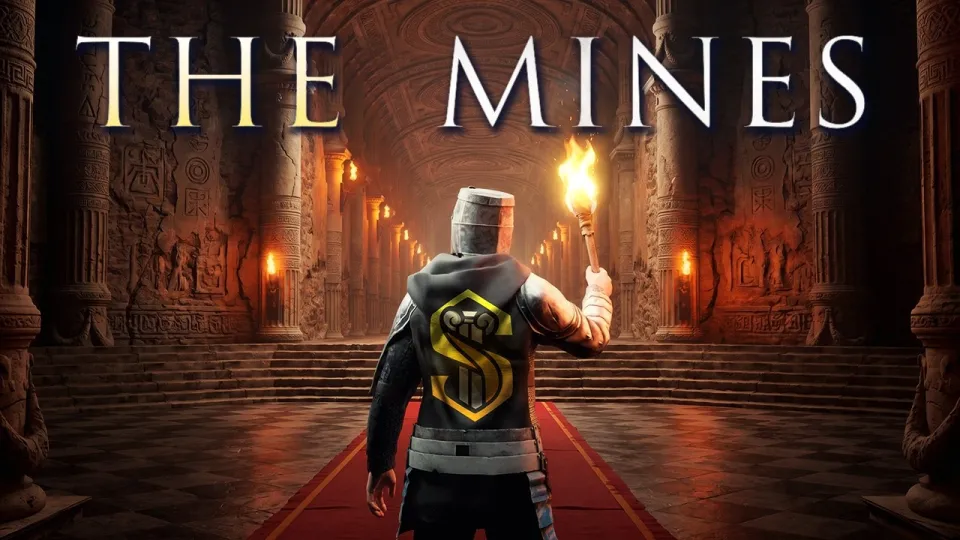
Video: I Survived in an ANCIENT FORTIFIED god rock base in Rust..
Need articles like this for your video? They help promote it on YouTube and Google — order them in the Telegram bot @sat_sit_bot. It writes articles around your video, embeds the video and publishes them on popular niche websites (no ads). Free trial — 50 articles.
Key takeaways
- Solutize built a solo god rock base on a Rust server with around 1000 players online.
- A god rock base hides its core inside a rock formation, so raiders must find the exact weak spot.
- Solo play on high-pop servers depends on scouting, low-profile building and staggered loot storage.
- The wipe was documented as a full solo Rust video, with the creator streaming the recording live on Twitch.
- Viewers repeatedly asked for duo wipes with creators such as Gorliac and Willjum after the solo episode.
A god rock base in Rust is a base built into or around a rock formation so that the rock itself becomes part of the walls, hiding the core and forcing raiders to guess where to spend explosives. Solutize's solo wipe on a server with roughly 1000 players is a practical case study in that approach: one player, one ambitious fortified rock build, and a whole server of potential raiders. You can watch the recording process live on Solutize's Twitch channel, where the sessions behind these videos are streamed.
What makes a rock base a god rock in Rust
A god rock is not a single blueprint but a family of builds that exploit terrain: the rock's collision shape replaces walls, ceilings or foundations, so the base's footprint is smaller and its interior is harder to map from outside. The core idea is denial of information. A raider who cannot see your loot rooms cannot plan a cheap raid, and every extra explosive they must commit to a guess is profit for the defender.
Three properties separate a real god rock from a rock with a door on it:
- The rock covers at least one full side of the core, so the cheapest raid path is not obvious.
- The build still has a legitimate entrance and exit that the owner can use quickly under fire.
- The interior is layered, so a single breach does not expose the tool cupboard and the main loot at once.
On a high-population server those properties matter more than raw size, because the threat is not one big clan but many small groups probing weak bases.
Scouting and site selection on a 1000 player server
Site selection decides most of a solo wipe before the first wall goes down. On a server with around 1000 players, every popular monument is contested, so the best rock formations are usually the ones that are slightly inconvenient: near a road for scrap runs but not on the main travel line, close enough to a safe zone for quick trades, and far enough from a large clan's sphere of influence that you are not the first name on their raid list.
Practical checks before committing to a spot:
- Count passing players for a few minutes; a rock that sees constant traffic will be found fast.
- Look for natural cover on the approach so you can move materials in without being tracked.
- Confirm the rock actually blocks building placement in the way you expect, since collision shapes differ between formations.
- Keep a fallback stash with tools and a sleeping bag away from the site in case the first attempt is discovered.
Solo players rarely win by building bigger; they win by building where nobody bothers to look twice.
Building an ancient fortified look without wasting resources
The "ancient fortified" style in the video title is a design choice as much as a defensive one: stone and wood textures, layered walls and a silhouette that reads as old rather than as a fresh raid target. For a solo player the aesthetic has a practical side, because a base that looks established and slightly worn is less likely to be treated as a quick score than a bare box with a single sheet metal door.
Resource discipline matters more than decoration. A solo wipe usually cannot afford full sheet metal everywhere, so the standard approach is to spend on the path a raider will actually take and economize elsewhere:
- Upgrade the walls facing the most likely breach direction first.
- Use honeycomb to add empty layers rather than upgrading interior walls nobody will touch.
- Keep the tool cupboard behind at least one door that is not on the direct line from the entrance.
- Place doors so that an attacker must break two before reaching anything valuable.
A god rock already gives you free layers on one or more sides; the job is to make the remaining sides cost about the same to break.
Loot routing and storage for a solo defender
Solo survival after a breach depends on what a raider finds when they get in. Spreading loot across several small stashes and rooms means a single successful explosive charge does not end the wipe. The common pattern is a decoy room near the entrance with mid-tier gear, a hidden core with the real valuables, and a small emergency kit kept somewhere the owner can reach after respawning.
A workable split for a solo base:
- Decoy room: weapons and armor you can lose without ending the wipe.
- Core: sulfur, components and any high-value blueprints or items.
- Emergency stash: a sleeping bag, basic tools and a small amount of scrap outside the main footprint.
This is also why god rock builds appeal to solo players: the hidden geometry gives you a natural place for a second storage layer that a raider has to find before they can take everything.
Defending and reacting when the raid starts
Defense in Rust is mostly preparation plus a fast response. When a raid begins, the defender's advantages are knowledge of the layout, shorter travel times inside the base and the ability to reseal breaches. A solo player should not try to hold every angle; the goal is to make the raid expensive and to preserve the core.
Useful habits during a raid:
- Respawn inside the base rather than outside, and move through interior routes you have already practiced.
- Repair or reseal the breached wall while the attackers are reloading or crafting more explosives.
- Use the rock's blind spots to flank attackers who assume the base has only one exit.
- If the core is lost, fall back to the emergency stash instead of feeding gear into a fight you cannot win.
Many raids on solo bases fail not because the defenders outgunned the attackers but because the attackers ran out of explosives before reaching anything worth the cost.
Questions solo players ask before trying a god rock
The most common doubts from viewers of solo Rust content are about time, server choice and whether the build is worth the effort at all. A god rock base is not faster to build than a simple 2x2; it is more efficient per resource spent on defense, but it requires scouting time up front. On a crowded server that trade is usually worth it, because a hidden core buys hours that a visible base does not.
Another recurring question is whether to play solo at all when duo and group wipes are more forgiving. Solo wipes are harder but they teach decision-making faster: every fight is a choice, every material counts, and every base location is a calculated risk. That is the appeal of the format, and it is why viewers keep asking for more solo episodes alongside group content.
All links from the video
- Live streams and recording sessions: https://www.twitch.tv/solutized
- Community Discord: https://discord.gg/57vX6Yvga6
- Second Discord invite listed in the video: https://discord.gg/F9kEQWZjnd
Conclusion
A solo god rock base on a 1000 player server works because it turns terrain into free defense and information denial into a weapon. The winning formula is unglamorous: scout carefully, build where traffic is low, layer the core, split your loot and respond to raids instead of panicking. Solutize's solo wipe video is a solid demonstration of that approach, and the channel is worth following if you want more solo survival breakdowns. If you want to see the process as it happens, catch the next session on Twitch and follow along live.
Source: I Survived in an ANCIENT FORTIFIED god rock base in Rust.. · Markdown version
Questions & answers
What exactly is a god rock base in Rust?
It is a base built into or against a rock formation so the rock's collision shape acts as walls, ceilings or foundations. The result is a smaller footprint, a hidden core and a raid path that is hard to predict from outside, which is especially valuable for solo players.
Is a god rock base viable for a solo player on a high-pop server?
Yes, but only with discipline. The build itself is not what keeps you alive; scouting a low-traffic spot, layering the core and splitting loot across rooms and stashes are what make the base worth the effort when a group decides to raid it.
How much time does a solo wipe like this take?
A full solo wipe spans multiple play sessions: early farming, scouting, the main build, then upkeep and defense. Most creators record these runs over several days and edit them into a single video, so the on-screen progress compresses many hours of play.
Why do viewers keep asking for duo wipes instead of solo ones?
Duo wipes are more relaxed and produce more interactions, since two players can split farming, watch each other's backs and take fights a solo player would avoid. Solo content is valued for the tension and decision-making, while duo content is valued for the banter and bigger plays.